Voltar ao Caderno
Bees
How does an Apis bee hive work?
Inside the beehive: how thousands of bees work as one
5 min read

One queen, hundreds of drones, and tens of thousands of worker bees. Inside an Apis mellifera beehive, each individual participates in an extraordinarily complex collective organization.
Viewed from the outside, a hive might look like nothing more than a wooden box surrounded by the constant movement of bees entering and leaving. On the inside, there is a highly organized society: thousands of individuals care for the brood, build honeycombs, store food, defend the entrance, regulate the temperature, and roam the territory searching for nectar, pollen, water, and other resources.
A healthy Apis mellifera colony has three main types of adult individuals: queen, workers, and drones. Among the workers, however, there is a much more sophisticated division of labor. It is precisely there that one of the most fascinating stories in beekeeping begins.
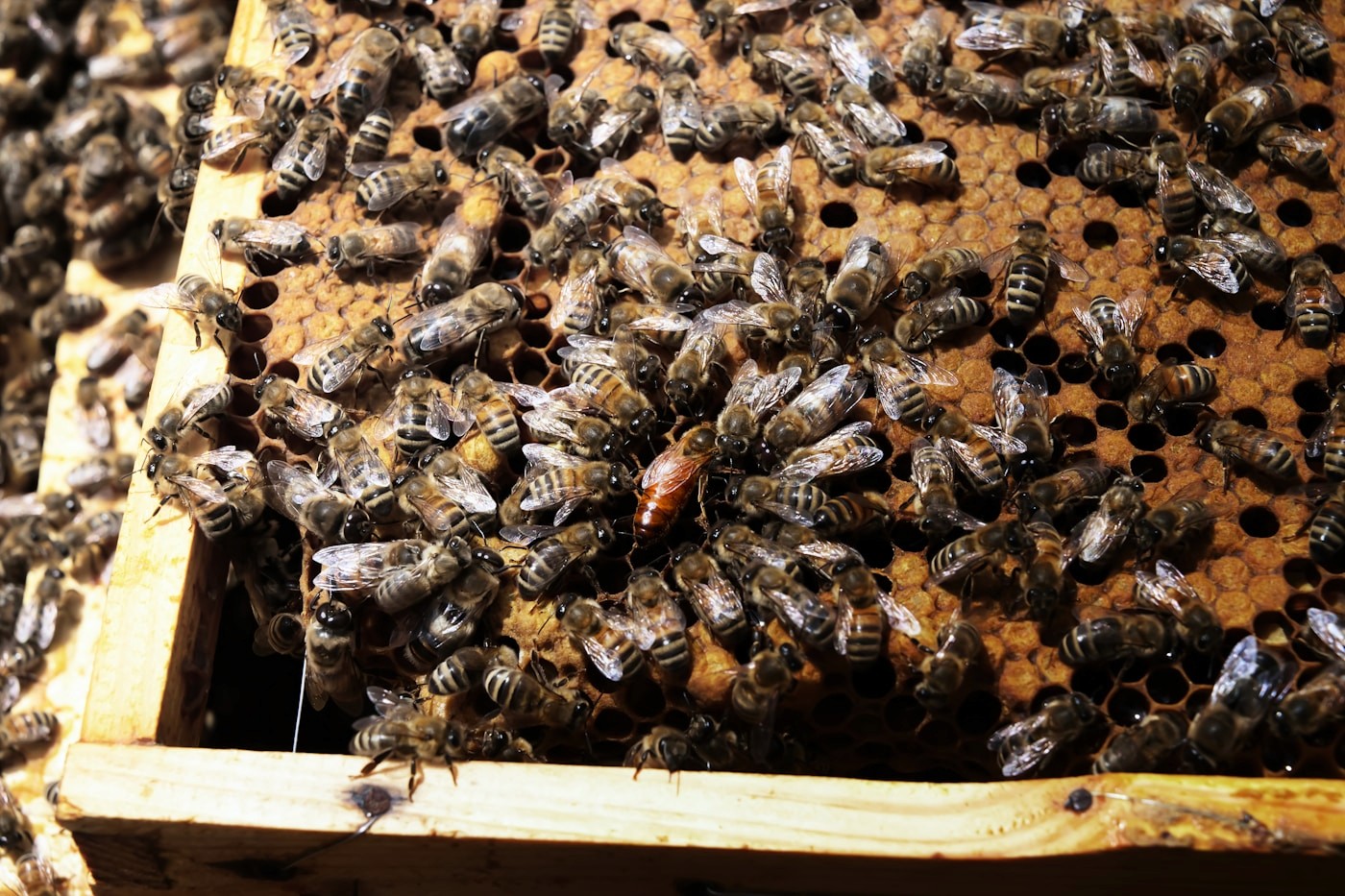
The queen: just one bee for thousands
Under normal conditions, there is only a single queen bee in the colony. She is the reproductive female, and her primary function is to lay the eggs that will allow for the population's renewal and growth. During periods of intense activity, a high-quality queen can exceed 2,000 eggs in a single day.
In addition to reproduction, her pheromones participate in the social and chemical organization of the colony. This does not mean she consciously commands every activity: the hive functions as a collective system, in which chemical communication, behavior, and response to the needs of the population itself organize the work.
The workers: the hive's workforce
Nearly all the bees we see entering and leaving a hive are worker bees. They are females and make up the vast majority of the population. A worker bee does not necessarily perform the same function throughout her entire life: her activities change as she ages and according to the colony's needs.
The youngest tend to remain initially inside the hive, cleaning cells and caring for the brood. Later, they may handle food, build and maintain honeycombs, defend the entrance, or participate in foraging. When we speak of nurse, builder, guard, forager, or scout bees, we are not talking about different species or castes, but rather about functions performed by the workers.
Nurses and guards
Among the functions of young workers is caring for the brood. Nurse bees feed the larvae that develop inside the honeycomb cells. A fully active colony can maintain thousands of eggs, larvae, and pupae simultaneously. While some bees head out in search of food, another population works continuously on raising the next generation.
Before or during the transition to outdoor activities, certain worker bees may work on defending the colony. Guard bees remain near the entrance and help recognize who belongs to that community. It is a tiny border protecting a society of thousands of individuals.
Foragers and scouts: from flight to discovery
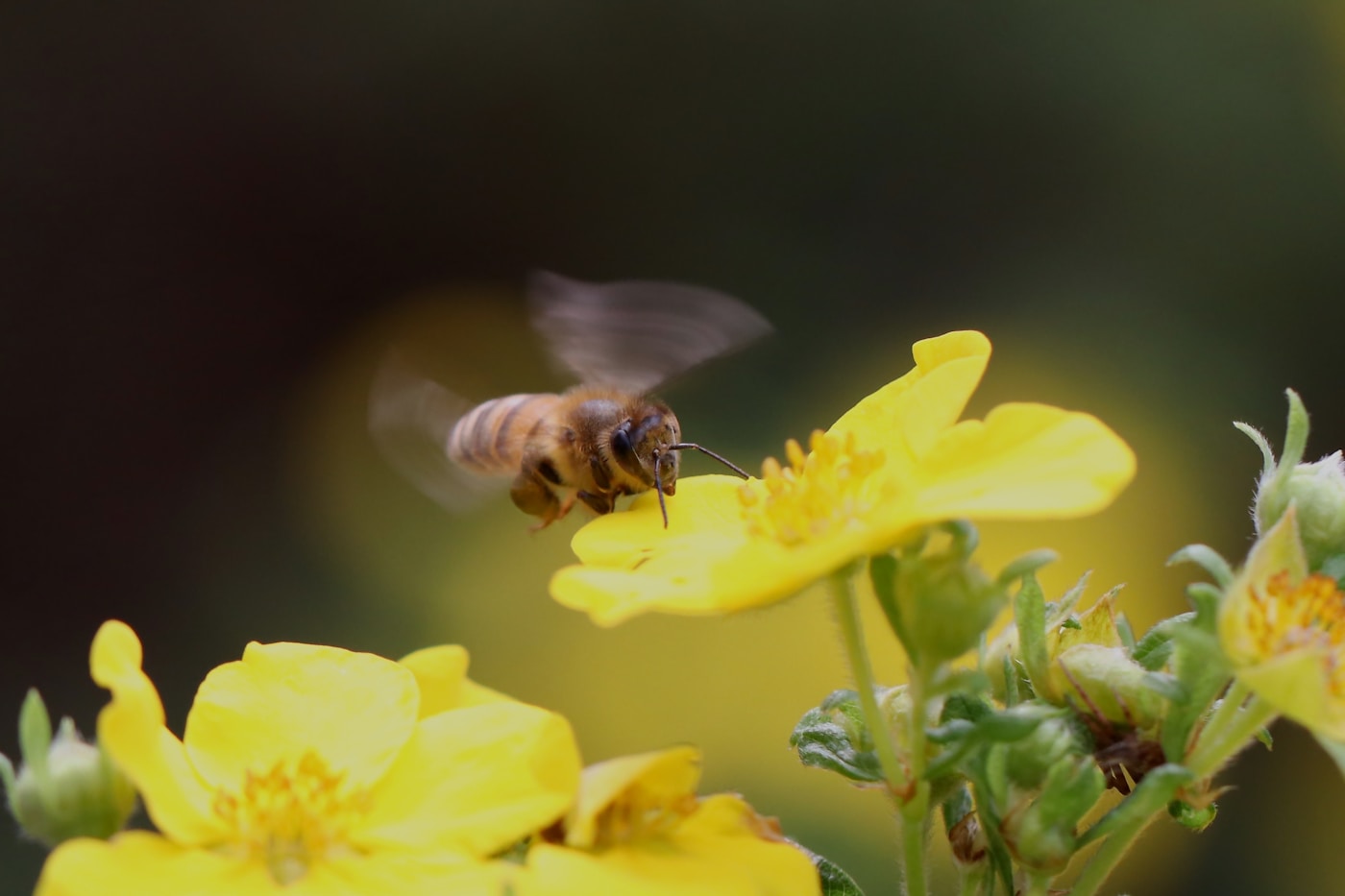
The worker bees that leave the hive to gather resources are frequently called foragers. They primarily collect nectar and pollen, as well as water, which is necessary for the colony's functioning. It is during this stage that the most obvious connection between the bee, the bloom, the territory, and the honey takes place.
The floral composition available around the apiary influences what the foragers find. This relationship with flowers helps explain why honey from different blooms can present distinct sensory characteristics. Learn also about Our Honeys and the landscapes that shape each origin.

The scout bee is not a fourth caste in the hive. She is a worker bee temporarily performing an exploratory role. Some search for food sources and communicate information about the resources found to the others. The famous waggle dance transmits clues about the direction and distance of a food source.
The drones: few, but essential for reproduction
Drones are the males of the colony. Their main biological function is reproduction: they search for virgin queens during mating flights. While queens and workers develop from fertilized eggs and have two sets of chromosomes, drones normally develop from unfertilized eggs and have only one set. This system is known as haplodiploidy.
How many bees are in a strong hive?
There is no single number. The population varies according to season, climate, food availability, genetics, management, and the colony's development stage. But a well-managed and strong hive can reach approximately 40,000 to 60,000 adult bees during periods of great activity.
In a colony with 40,000 to 60,000 adults, there may be a single queen, hundreds of drones — with significant seasonal variation — and tens of thousands of workers. In addition to them, there are eggs, larvae, and pupae in development. When we look at a strong hive, we are facing a population comparable to that of a small city.
How far can a bee fly to find food?
Foragers can explore a considerable area around the apiary. The distance traveled depends mainly on the availability and quality of the resources found; management references consider a range of 4 to 5 kilometers to be relevant for these trips. A hive is not only related to the few meters of vegetation around it: bees explore a landscape.
The more abundant and closer a good food source is, the less need there tends to be for long-distance travel. This is why understanding the apiary's surroundings is so important to understanding its blooms and Our Caatinga.
A hive is not just a box full of bees
Queen, drones, and workers have different functions. Among the workers themselves, tasks change throughout life and according to what the colony needs. While some care for the brood, others build, clean, defend, explore the territory, or collect food.
None of them, in isolation, represents the hive. It is the joint action of thousands of individuals that allows the colony to survive, reproduce, store food, and respond to environmental changes. Every day, part of this society leaves the hive, travels the territory, finds the flowers, and returns. It is in this meeting of bee, bloom, and landscape that the story of each honey also begins.